
Safe Driving in Fog, Ice and Heavy Rain: A Winter Travel Guide
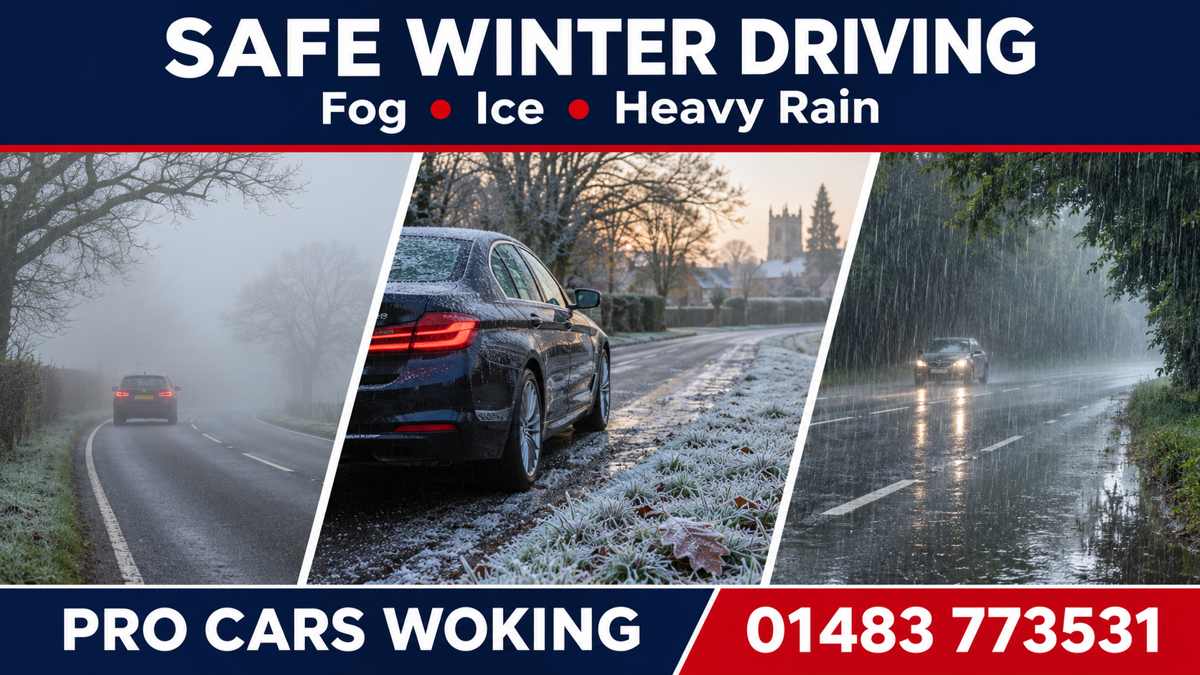
Safe driving in fog, ice and heavy rain starts before you leave home. Around Woking and across Surrey, winter journeys can involve poor visibility, slippery surfaces and unexpected delays. Whether you are heading to work, collecting family or travelling to an airport, preparation matters more than keeping to your usual timetable.
This winter travel guide brings together practical advice from the Highway Code, National Highways and the Met Office. No driving technique removes every weather risk: sometimes the right decision is to delay your journey.
Safe Driving in Fog, Ice and Heavy Rain: Before You Set Off
Check the forecast and current warnings for your starting point, destination and route. Review your plans again before departure, especially for an early flight or a late return. A clear afternoon forecast does not tell you everything about the conditions you may encounter later.
Vehicle preparation is essential for safe driving in fog, ice and heavy rain. Check tyres, lights, wipers and screenwash. Clear windows and mirrors properly rather than driving with a small patch of visibility. Pack warm clothing, a charged phone, drinking water and any essential medication. For wintry conditions, carry de-icer, an ice scraper and a torch.
Allow time for preparation as well as travel. Tell someone your expected arrival time when making a longer journey, and keep booking details accessible if your plans involve a flight, train or hotel.
Driving Safely in Fog
Slow Down and Choose the Correct Lights
Check your mirrors and reduce speed before entering fog. Use dipped headlights; full beam can reflect back and make visibility worse. Do not assume automatic headlights have switched on appropriately. National Highways recommends using wipers and demisters to maintain a clear view.
The Highway Code requires headlights when visibility is seriously reduced, generally when you cannot see beyond 100 metres. Front and rear fog lights must only be used when visibility is seriously reduced, and must be switched off when conditions improve.
Leave Room to React
Keep enough space to stop within the distance you can see clearly. Following another vehicle’s rear lights closely gives false reassurance. If a driver follows you too closely, do not increase speed to escape them. Focus on a controlled pace and your own stopping space.
See National Highways’ fog advice before travelling.
Driving on Ice and Watching for Black Ice
The Highway Code advises against driving in icy or snowy conditions unless your journey is essential. If travel is necessary, stopping distances can be ten times greater than on dry roads. Treated roads still require caution.
Accelerate, brake and steer gently. Reduce speed before bends, then steer smoothly through them. Conditions can change over short distances, so avoid assuming that good grip on one stretch continues around the next corner.
Black ice is difficult to spot. The Met Office explains that rain or drizzle falling onto a road surface below freezing can form it. A surface that looks wet may therefore be more hazardous than it appears. Prefer suitable main routes where possible, and reconsider steep or exposed roads.
Safe driving in fog, ice and heavy rain requires you to reassess conditions throughout the journey, particularly when temperatures fall. Read the Highway Code’s adverse-weather rules for the full guidance.
Driving in Heavy Rain and Avoiding Floodwater
Rain reduces grip and visibility. Increase your following gap to at least four seconds, allowing more room as conditions worsen. Spray can hide hazards, so adjust your speed before visibility deteriorates further.
What If Your Car Starts Aquaplaning?
Aquaplaning happens when water separates the tyres from the road. Steering may suddenly feel light or unresponsive. National Highways advises easing off the accelerator gently, holding the steering wheel straight and avoiding hard braking. Once control returns, reduce speed carefully.
Read more in National Highways’ wet-weather driving guidance.
Do Not Drive Through Flooded Roads
Choose another route rather than attempting floodwater. Depth, current and hidden road damage are difficult to judge. A larger vehicle is not a reason to take the risk. If heavy downpours are expected, consider delaying departure.
Safe driving in fog, ice and heavy rain includes recognising when conditions are beyond your comfort or ability. Consult Met Office travel guidance when planning, and follow any advice to avoid travel.
Planning Local Journeys and Airport Transfers
For trips around Woking, consider whether you can change your departure time or rearrange an appointment. For flights, check airline updates alongside road conditions: an unchanged departure time does not guarantee an uncomplicated journey to the terminal.
If you prefer someone else to drive, contact Pro Cars Woking to discuss your journey. Explore our airport transfer services, including Woking to Heathrow transfers and Woking to Gatwick journeys.
Taxis face the same weather hazards as other vehicles. Availability, routes and timings depend on conditions; a booking cannot make an unsafe road safe. The principles of safe driving in fog, ice and heavy rain apply equally to private cars and taxis.
Your Checklist for Safe Driving in Fog, Ice and Heavy Rain
Safe driving in fog, ice and heavy rain depends on preparation, patience and adapting your plans. Before each journey:
- Check current weather warnings and road conditions.
- Prepare your vehicle and clear your windows fully.
- Allow extra time without putting pressure on your arrival.
- Adjust speed and following distance to the conditions.
- Avoid flooded roads and postpone unsafe journeys.
Guidance checked: 11 November 2026. Check current warnings before travelling. This article summarises official guidance and does not replace it.