
Driverless Taxis: Would You Put Your Life in Software’s Hands?
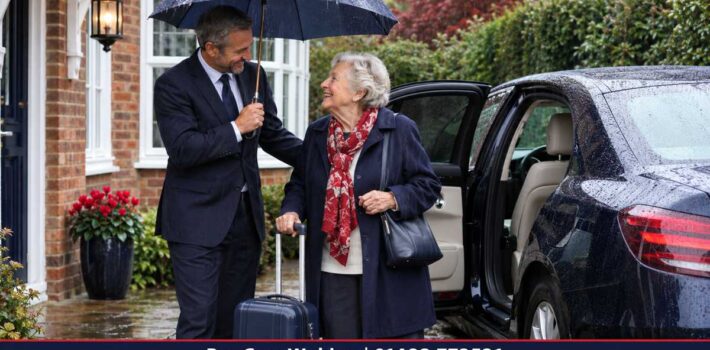
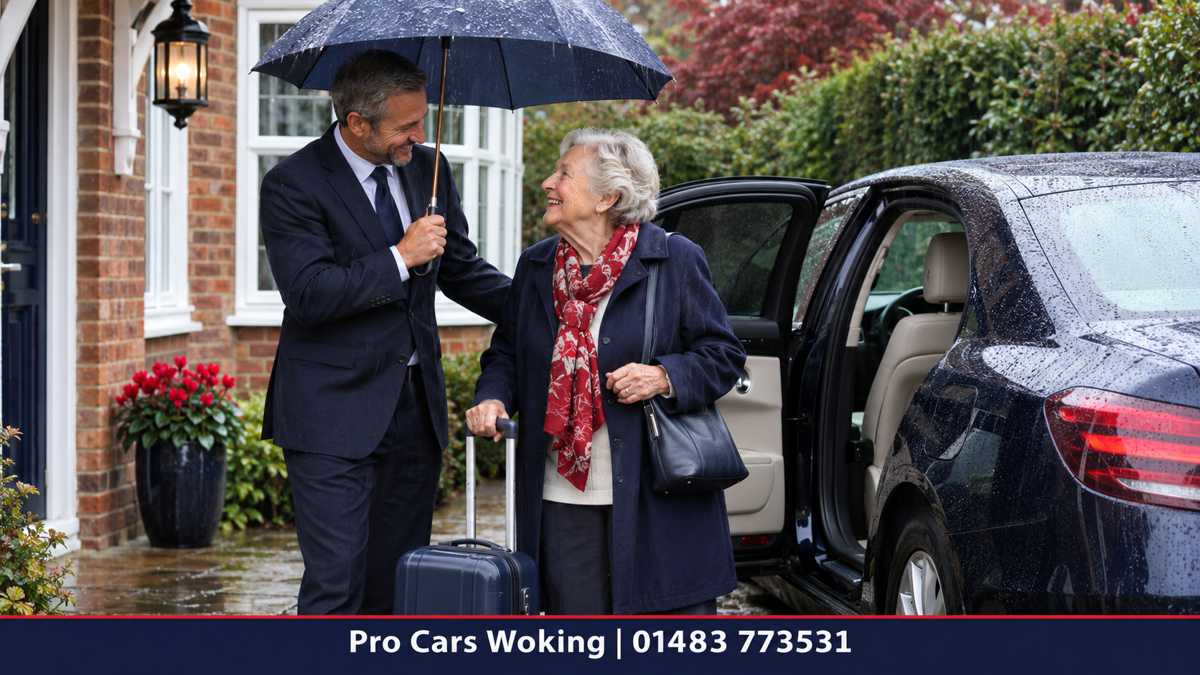
What can a professional taxi driver do that driverless taxis cannot? Start with the little things: hold an umbrella, carry your suitcase or wait in airport arrivals to welcome you after a long flight.
Then there are the moments when a helping hand matters more. Your elderly mum needs a little longer to get into the car. Your child feels unwell. You are upset, tired or unsure where to go. Having someone there who can listen and help can make a difficult journey easier.
At Pro Cars Woking, we believe that care is part of a good taxi service. Before we talk about what the latest technology can do, it is worth remembering what a person can do for a passenger.
The personal help driverless taxis cannot offer
Picture a wet evening after a long flight. You have a tired child, two suitcases and a phone running low on battery. At that point, a helpful person can make all the difference.
A professional driver can offer practical help that driverless taxis cannot provide themselves:
- Hold an umbrella while you get into or out of the car.
- Help with bags, shopping, luggage or a pushchair.
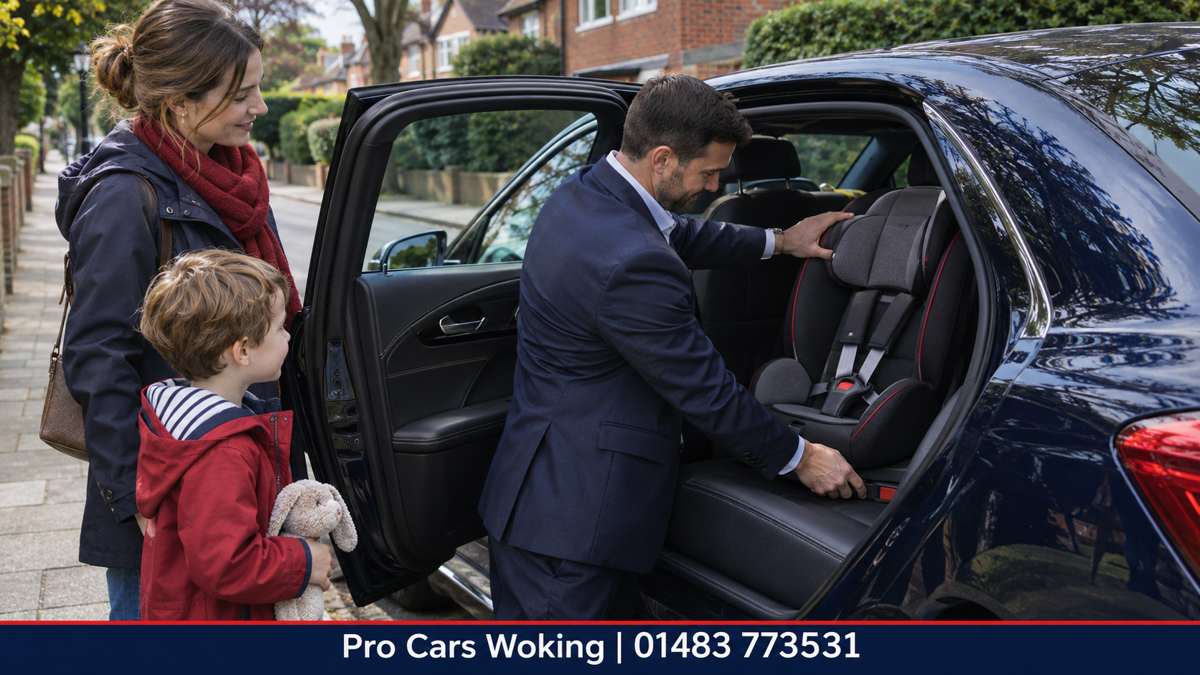
- Bring a child seat when arranged and help secure it in accordance with the manufacturer’s instructions.
- Offer a drink or a serviette when available, or a tissue when someone needs one.
- Share useful local knowledge, such as which entrance to use or where a collection will be easiest.
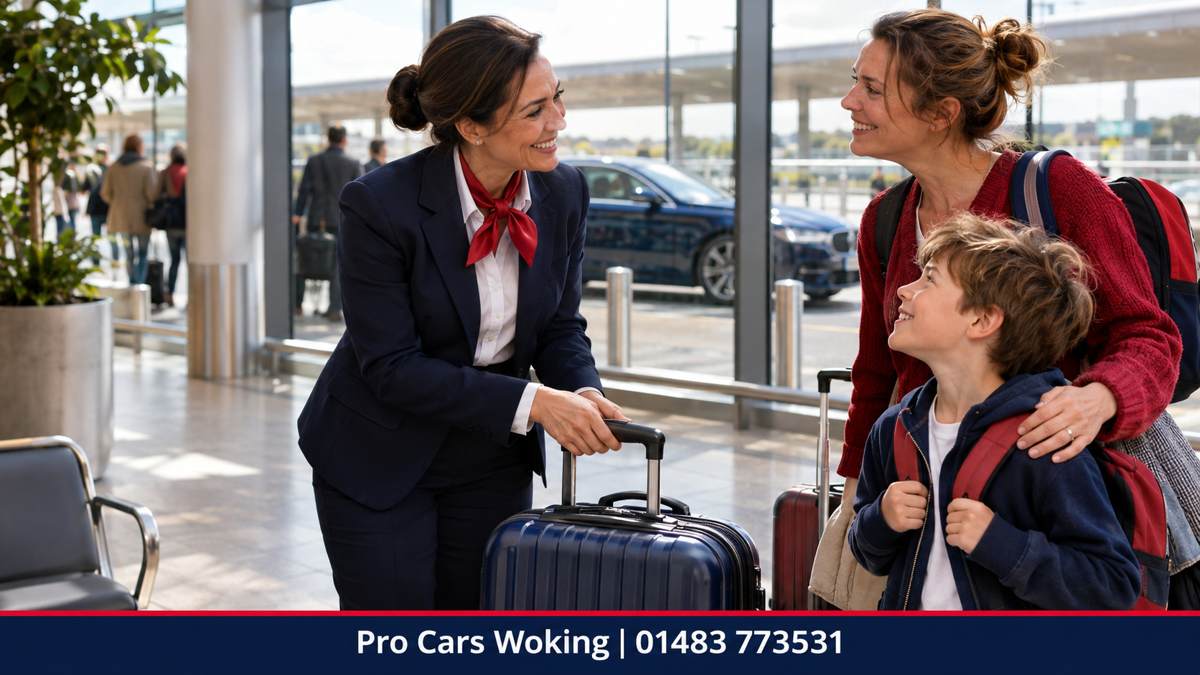
- Wait in airport arrivals for a meet and greet, rather than leave you searching for the vehicle.
- Offer an elderly passenger a steadying hand, where appropriate, and time to settle in.
- Deal with a spill or cleanliness problem before the journey continues.
- Call emergency services and provide first aid within their training, where safe and appropriate.
- Notice when someone is upset or anxious and respond with patience and compassion.
- Speak directly by phone before collection to sort out a changed address or a confusing meeting point.
These are examples of what a human driver can offer, rather than a promise that every driver provides every service. Child seats, meet and greet and any particular assistance should be discussed when booking.
A driverless service may have remote support. But a voice on a speaker cannot carry your suitcase or stand beside you in the rain.
Why driverless taxis are back in the news
In a BBC News report by James Chater, “Waymo pulls driverless taxis from all US freeways”, Waymo said it had temporarily suspended driverless freeway journeys across its US markets following restrictions in California.
The BBC reports that California’s Department of Motor Vehicles intervened after incidents involving active roadworks, describing an “imminent hazard to public safety”. Waymo said there were no injuries or collisions in the US Route 101 construction-zone incident.
The distinction matters: Waymo has paused freeway operations; it has not withdrawn all its driverless taxis from American roads. Its vehicles can continue operating on ordinary city streets.
Even so, when an established operator has to stop one type of journey, it is reasonable for passengers to ask what went wrong and how it will be put right.
Driverless taxis: the incidents behind the recalls
The official records show that these concerns did not begin with November’s headlines. They also help separate the number of incidents from the number of vehicles covered by a recall.
- April and May 2026: Waymo’s construction-zone recall filing with the US road safety regulator, NHTSA, describes six events in Phoenix during April in which vehicles passed ramp-closure signs. It also records seven Waymo vehicles entering active construction lanes in the San Francisco Bay Area on 18 May. These are documented events and vehicle encounters, not a count of injury crashes.
- June 2026: that filing covered 3,871 fifth-generation automated driving systems. The proposed remedy involved software improvements and additional operating procedures.
- May 2026: a separate floodwater-related recall covered 3,791 automated driving systems. Its chronology describes an unoccupied vehicle proceeding into an impassable flooded section of road on 20 April. Waymo applied interim weather and mapping restrictions to the affected vehicles.
- November 2026: Associated Press reported two recent incidents cited by California’s regulator: one involving three vehicles entering a construction zone on 5 November, and another involving police vehicles controlling traffic on 6 November.
These figures concern specific Waymo problems; they are not a total for every incident involving driverless taxis in America. Nor should the two recall populations be added together as though they were separate fleets: the same vehicles may be covered more than once.
A software recall is not automatically a withdrawal from service. The records describe software remedies and operating restrictions. In November, Waymo suspended commercial driverless freeway journeys across its markets, while ordinary city-street services could continue.
For us, the concern is that similar roadworks problems appear in records months apart. Passengers are entitled to ask how a fix is tested, what its limits are and what happens if a difficult situation occurs again.
What should London learn about driverless taxis?
The London Assembly’s investigation into autonomous passenger vehicles examines safety, accessibility, licensing and the effect on people working in taxis and private hire. It also asks what London can learn from trials elsewhere.
Testing a self-driving vehicle with a safety driver present is different from carrying passengers with nobody at the wheel. Those situations should not be confused.
In our view, London would be wrong to rush wider use of driverless taxis without examining these American incidents closely. They do not prove that every UK trial is unsafe, but they are a good reason to ask difficult questions before expanding.
When considering driverless taxis, passengers deserve clear answers about roadworks, unexpected instructions, breakdowns and the help available when something goes wrong.
Are driverless taxis safer than human drivers?
It would be unfair to discuss the problems without acknowledging the evidence in their favour.
Waymo’s published safety dashboard reports 95% fewer crashes involving serious injury or worse against its human-driver benchmarks. The dashboard covers surface-street operations in its operating areas; it is not a direct comparison with professional taxi drivers in Britain.
The freeway restrictions do not establish that human drivers are always safer. Equally, those statistics do not answer every question about every road, weather condition or passenger need.
Our argument is that professional drivers still have an essential role. Their value includes how they care for people before, during and after the drive.
A familiar voice and a helping hand
Some passengers enjoy a chat. Others want a quiet journey home. Sometimes a customer needs reassurance; sometimes they simply need someone to lift a bag.
That is part of the appeal of a local service. You can explain what you need to a person and discuss the arrangements before travelling.
For our airport transfers, including journeys to Heathrow and Gatwick, those small details can make a long travel day easier.
Choose the service that looks after you
There is no obligation to choose driverless taxis simply because they are new. Supporting a local taxi or private hire business is also a choice to support the people who provide that service.
We welcome useful technology. We also believe there is plenty of room for a real person behind the wheel, ready to listen and lend a hand.
For your next journey, speak to Pro Cars Woking on 01483 773531. Tell us where you are going and any help you would like us to arrange.
Commentary by Pro Cars Woking, prepared on 18 November 2026. Reporting is attributed to the linked sources; the views about the pace of adoption and the value of personal service are our own. Services and operating restrictions may change.